Tuesday, 30 October 2012

Character Flaws Buffed

Questions we had to consider after we had our tutorial.

1) What's the symbolism behind building a den
-As a form of sanctuary, creating something that was hers to fill with the things she holds dear or secretly wants.

2) Though she has a mental disability what characteristics will she display in order to make this clear to the audience aside from her being an adult.
-Being vary particular with the way things are laid out, having things in it's right and proper place whether this be based on colour or size. As well as this I think that she should be very slow with what she does, as if she is trying very careful not to get it wrong.

3) Lastly though she has the mentality of a child, what age are we looking at as there are vast differences between the mannerisms of children between the ages of 0-1, 2-4, 5-7, 8-10, etcetera.
- I had a little look at this article online to understand the different charcteristics between the age criterias of young children.
http://www.pbs.org/parents/childdevelopmenttracker/five/index.html
Based on this I would put our character at being six years old, but there are still a few five year old tendencies that may still apply to her.

Thursday, 25 October 2012

Research Into Art Direction

Not knowing a lot about Art Direction I thought the best place to start would be by having a look at what films have won Academy Awards for their Art Design or as it's now classed, Best Production Design.

The consecutive winners for the past five years have been:
(2007) Sweeny Todd: The Demon Barber of Fleet Street: Dante Ferretti
(2008) The Curious Case Of Benjamin Button: Donald Graham Burt
(2009) Avatar: Rick Carter and Robert Stormberg
(2010) Alice In Wonderland: Robert Stromberg
(2011) Hugo: Dante Ferretti

As you can see a few of the names have cropped up more than once and as I think back to these films they have been Art Director on, I can remember specific elements of clothing or location that stood out to me.

Such as Sweeny Todd's Hair and Jacket, as well as the grey scale that was present throughout
Alice's Dress, hair and pale façade in Alice in wonderland etc.

I think it is therefore important for me to pick an element of clothing perhaps for my character to really try and make stand out and become iconic to the audience.

Monday, 22 October 2012

Moodboard


Original Source....

http://www.glogster.com/sarahjenniesteph/art-direction-mood-board/g-6l7a6pq19n3dkiljamdfla0


Feedback and Food For Thought


We finally settled on an idea for our two minute character piece...

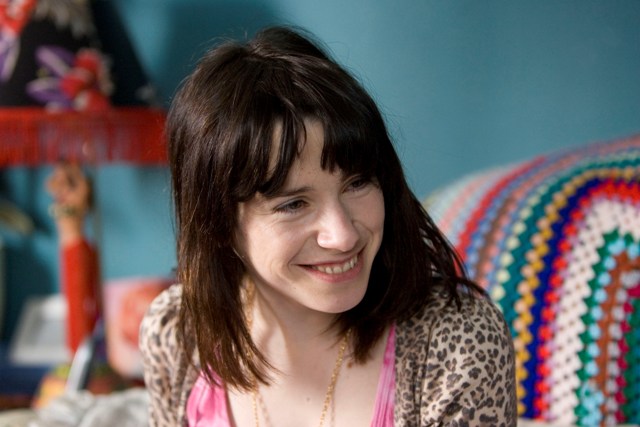
We decided to scrap sticking to a certain disability as we had originally made our character have autism, but by just playing on the rules of her having a mental disability this takes off some of the restrictions we would have had. Our character is building a den, and we watch this process through their eyes and a range of close ups that hide the fact that the character is an adult. Something that will be revealed before the ending of the piece.

During the tutorial today we had a few points that we needed to consider about our character in terms of the depth to what she was doing.
1) What's the symbolism behind building a den
2) Though she has a mental disability what characteristics will she display in order to make this clear to the audience aside from her being an adult.
3) Lastly though she has the mentality of a child, what age are we looking at as there are vast differences between the mannerisms of children between the ages of 0-1, 2-4, 5-7, 8-10, etcetera.

Tuesday, 16 October 2012

Art Direction

In the session we talked about the responsibilities of each person and their role. Being Art Director it was discussed that the list of my responsibilities would include.....
Storyboards
Sketches; Costume Ideas, Props
Set Design
Moodboard; Colour Texture, Pictures from magazines/movies etc
Work with the editor in terms of grading and lighting
Use the budget to buy or borrow things to dress the set and character
-Jumble Sale
-Charity Shop
-Drama departments prop collection
Mise-en-scene in character detailing

My job as an Art Director will be to start thinking about how I would style the Character as well as the filming location. This all has to fit in with the mood of the piece or at least be aesthetically valid/relevant.
Thoughts that have so far come to mind include bits and bobs taken from various films with my own personal twist on it such as...
Happy Go Lucky
Based on how Poppy's always sees the bright-side of life and her happiness despite other people perceptions namely her driving instructor.


Ramona and Beezus
Ramonas way of thinking and her good intentions, as well as the way she views life.

The Art Direction Handbook by Michael Rizzo

This book outlines a range of aspects and responsibilities that comes with being an art director mentioning, but not limited to; the pre production process, the other departments you need to be involved with i.e.; The greensman, prop master, visual effects etc. as well as talking about going through the design process.

It gives you a good understanding of what your role as an Art Director is and showed me that in some ways they are responsible for the final picture the audience views.


2 minutes...

Based on the "Stalker Profile" we got into groups and picked one which we then had to develop or strengthen to then turn into a two minute sequence.
The Roles are as follows...

Hannah Mason - Director
Luke Parker - Producer
Leon Riley - Cinematographer
Jen Francis - Art Director
Hannah Bushnell - Editor
Jacob Waterall - Sound Design

We decided to go with Leons idea of a middle aged woman who acts like a child due yto an unknown traumatic event.
During our group meeting we talked and tried to pad out the two minutes and developed the idea, so instead of a traumatic event the woman is autistic. Shown a point of view angle for the beginning of the piece, the only sound we can hear is a child humming or singing a nursery rhyme, giving the audience the idea that they are looking at life through the eyes of a child. This only lasts for a while until it switches and we realise that we are actually looking at life through the point of view of a much older person....

In terms of Art Direction I got some really clear visuals of what I wanted the woman to be dressed like and how she would stand out in her setting. All these elements will be made clear on my moodboard.

Tuesday, 9 October 2012

A lesson in stalking

In order to help create.... Or better yet to help generate a fictional dramatic situation we were given the assignment of picking an unsuspected member of the public and analysing their characteristics in order to help use that as the stem to build a fictional life for them answering a range of questions. Questions as trivial as what there name was and how old they were to more probing questions like why they were unhappy in life and what they intended to do to help them get out of such a situation they were in if any.

The purpose of the exercise was to help you realise that when you create a character it's important to think of the nitty gritty questions about their life whether or not that would be shown on film as it helps the character to have some kind of depth as without knowing these things then they may come across as hollow, whether this is on paper or if they are being played out by an Actor or actress on screen.

The basis of my character: He was stuck in a job he disliked with a fiancé he no longer loved, but stayed in his situation because of the promise her made to his mother before she died. He is having an affair with a woman he loves. During their meet up, as she talks he's thinking about leaving his life behind once and for all.

A few of the characters that stood out to me based on what the class had said....
-A drug runner who knows that the only way to escape the life is to ride the waves to the top of the business.
-A grandson who has to deal with how is grandfather can't remember anything after his wife died, and sadly that includes the birth of his grandson.
-A regular looking guy, who is sweating. The slight tarnish/abnormality shows that he is hiding something that at first you wouldn't notice.

This was a good exercise that allows you mind to wonder to almost any situation for a character that you can then tweak and come up with a enticing and interesting character that you then create a story-world around.

Tuesday, 2 October 2012

The Three Act Structure

In today session we went over how to structure a 10 minute film in terms of when specific incidents should happen in order to make it not only engaging but also fulfilling for the audience.

Set up: Needs to occur in the fort 2-3mins, this is the introduction of the main character and the story-world  it needs to happen within this time frame in order to allow the audience to develop some form of emotion attachment.
Equilibrium: Everything is as it is
Enticing Incident: This is the event that pitches the story forward
Plot Point 1: Where the character gets a chance to do what they desire
Midpoint: Where the character gets the closest to what they desire. If the film was to end here then it looks as if they have everything they wanted.
Plot Point 2: After the brief euphoria that is the midpoint something happens to send the characters desire crashing back to nothing but a distant hope, they need to build themselves back up again/prove themselves/get out of a low predicament.
Resolution: Everything is in equilibrium, based on the story-world this could be anything from your character getting their happily ever after or dying. As long as it coincides with the story-world.

As well as this within your story there needs to be these three things, which is automatic, something you don't need to plan to film, but without them the film will just feel empty....
Causality: Why does one thing lead to another
Time: When is it all taking place
Space: Where are they, are the event happening all in the same or different space?